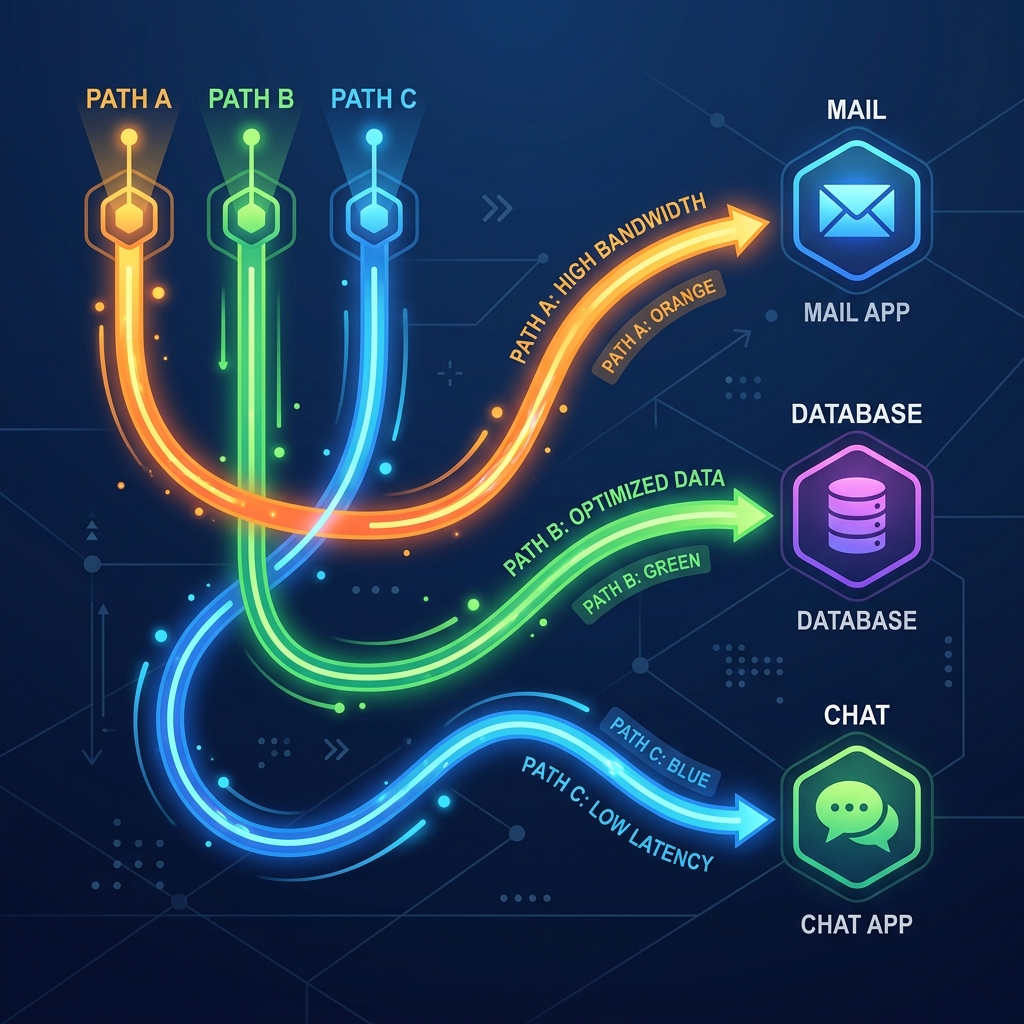
Choosing an automation platform is no longer a simple “which app connects to which app” decision. In 2026 the three leading options—Zapier, Make, and n8n—differ sharply on pricing models, complexity handling, AI depth, and data control. The wrong choice can quietly inflate monthly costs or limit what you can build as workflows grow more sophisticated.
This guide compares the three platforms on the criteria that actually matter for business owners, operations teams, and technical builders heading into late 2026 and 2027: cost at real volume, ease of use, branching logic, AI agent support, integrations, and self-hosting options. The goal is practical decision-making, not feature checklists.
Quick Verdict
| Priority | Recommended Platform | Why |
|---|---|---|
| Fastest setup, non-technical team, low volume | Zapier | Largest app catalog, gentlest learning curve |
| Visual complex workflows, good cost/power balance | Make | Strong canvas builder, competitive per-operation pricing |
| High volume, AI agents, full control, self-hosting | n8n | Per-execution billing (or free self-hosted), deepest AI tooling |
Most teams start with Zapier or Make and move toward n8n when volume, complexity, or compliance requirements increase.
Pricing Models Explained
The platforms bill in fundamentally different ways. Understanding the unit is more important than the advertised starting price.
- Zapier charges per task. Each successful action step in a multi-step Zap usually counts as one task. Triggers and some utility steps are free, but longer workflows consume tasks quickly.
- Make charges per operation (sometimes called credits). Each module that runs in a scenario typically costs one operation. Routers and some error handlers may be free.
- n8n charges per workflow execution on its cloud plans (the entire run counts as one execution regardless of how many nodes it contains). The self-hosted Community Edition is free; you only pay for the server.
Approximate monthly cost at common volumes (2026 figures, directional):
| Monthly volume | Zapier (approx.) | Make (approx.) | n8n Cloud | n8n Self-hosted |
|---|---|---|---|---|
| 1,000 runs | $20–50 | $9–16 | $24 | ~$5–15 VPS |
| 10,000 runs | $70–300 | $29–60 | $50–60 | ~$15–30 VPS |
| 50,000+ runs | $300–800+ | $100–300 | $150+ | ~$40–80 VPS |
For simple two- or three-step automations at low volume, Make or Zapier often feel cheaper to start. Once workflows become multi-step or high-frequency, n8n’s execution-based (or free self-hosted) model pulls ahead sharply.
Feature Comparison Table
| Feature | Zapier | Make | n8n |
|---|---|---|---|
| Pricing unit | Per task | Per operation | Per execution (cloud) / free self-hosted |
| Entry paid plan | ~$20–30/mo | ~$9–12/mo | ~$20–24/mo (cloud) |
| Free tier usefulness | Limited (100 tasks) | Useful (1,000 ops) | Unlimited if self-hosted |
| Self-hosting | No | No | Yes |
| Visual builder | Linear / simple paths | Excellent canvas | Strong canvas |
| Complex branching & loops | Limited | Strong | Strong |
| Custom code | Limited JS | Limited | Full JS + Python |
| Native AI / agent depth | Good accessibility | Moderate | Deepest (LangChain-style agents, RAG, local models) |
| App integrations | 7,000–9,000+ | ~1,500–3,000+ | 400+ native + community + any API |
| Learning curve | Lowest | Moderate | Highest |
| Best for | Non-technical, simple flows | Visual mid-complexity | Technical, high volume, AI-heavy |
Ease of Use and Learning Curve
Zapier remains the easiest entry point. Most users can build a working multi-step automation in under an hour. The interface favors linear “when this happens, do that” thinking.
Make uses a visual scenario canvas that makes branching, routers, and data mapping clearer once you learn the interface. The learning curve is steeper than Zapier but lower than full development tools. Many operations and marketing teams prefer it for visibility into complex flows.
n8n sits between a no-code tool and a lightweight development environment. The canvas is powerful, and the JavaScript/Python code nodes give almost unlimited flexibility. First productive workflows typically take longer, especially if you self-host. Teams with any technical capacity usually adapt quickly; pure non-technical teams often struggle without support.
AI and Agent Capabilities
All three platforms added meaningful AI features between 2025 and 2026. The differences matter if you plan to move beyond simple “summarize this email” steps.
- Zapier emphasizes accessibility: natural-language Zap building, AI Actions, and polished agents that non-technical users can launch quickly. Strong for common SaaS-to-SaaS AI tasks.
- Make offers AI modules and in-canvas agents. Capable for many use cases, though deeper retrieval-augmented or multi-agent patterns often require more manual construction.
- n8n leads on depth. Native LangChain-style agent nodes, support for multiple LLM providers (including local models via Ollama), vector stores, memory, tool calling, and full custom logic make it the strongest platform for production AI agent workflows and multi-step autonomous processes.
If AI agents, RAG pipelines, or high-volume LLM orchestration are core to your roadmap, n8n currently offers the highest ceiling.
Integrations and Extensibility
Zapier wins on raw catalog size—thousands of maintained native apps. This is decisive when you need a niche SaaS tool that the others do not support out of the box.
Make provides a large and practical set of integrations for most business stacks, with strong support for data transformation between steps.
n8n has fewer native nodes but compensates with a flexible HTTP Request node, community nodes, and the ability to run custom code. Almost any API can be integrated. For teams comfortable building connectors, the practical reach is very high.
Self-Hosting and Data Control
Only n8n offers true self-hosting under a fair-code license. You can run the Community Edition on your own server or Kubernetes cluster with unlimited executions. This provides:
- Full data residency and sovereignty
- Predictable infrastructure cost instead of usage-based fees
- Ability to keep sensitive customer or operational data off third-party automation platforms
Make and Zapier are cloud-only. Both offer regional options and enterprise compliance features, but the data still flows through their infrastructure.
For regulated industries or organizations with strict internal policies, self-hosted n8n is frequently the deciding factor.
Which Platform Fits Which Situation
Choose Zapier when:
- Your team is non-technical and needs results this week
- You rely on many niche SaaS tools
- Workflow volume stays relatively low
- Simplicity and reliability matter more than cost optimization
Choose Make when:
- You want a visual builder for branching and multi-path scenarios
- Cost efficiency matters and volume is moderate
- The team is comfortable with a moderate learning curve
- You prefer a pure cloud experience without managing servers
Choose n8n when:
- You have (or can access) technical capacity
- Volume is high or expected to grow
- You need advanced AI agent, RAG, or custom logic capabilities
- Data control or self-hosting is required
- Long-term cost predictability is important
Many organizations run a hybrid approach temporarily: Zapier or Make for simple departmental automations, n8n for core high-volume or AI-heavy processes.
Migration Considerations
Moving between platforms is rarely one-click. Workflows must be rebuilt. Plan for:
- Mapping triggers and actions carefully
- Re-testing edge cases and error handling
- Updating credentials and webhooks
- Parallel running during transition to avoid downtime
The investment is usually justified once monthly bills or complexity ceilings become painful. Starting with a clear primary platform reduces future migration effort.
Frequently Asked Questions
Is n8n really free?
The self-hosted Community Edition is free software. You pay only for the server or hosting environment. n8n Cloud is a paid managed service with execution-based pricing.
Which platform is cheapest for a small business?
At low volume, Make often has the lowest paid entry cost. At higher volume or with complex multi-step flows, self-hosted n8n becomes the clear cost leader.
Can non-technical teams use n8n?
Yes, but the learning curve is steeper. Many teams pair n8n with internal technical support or an implementation partner for the first set of workflows.
Do these platforms support AI agents in 2026?
Yes. All three offer AI features. n8n currently provides the deepest native support for agentic workflows, tool use, and local models.
What about reliability and uptime?
Zapier and Make are mature cloud services with strong track records. Self-hosted n8n reliability depends on how well you (or your host) operate the infrastructure. Cloud n8n offers a managed middle ground.
Should I start with Zapier and switch later?
This is a common and reasonable path. Many teams begin with Zapier for speed, then migrate high-volume or complex workflows to Make or n8n as costs or requirements grow.
How do these compare for e-commerce or agency use cases?
Zapier’s integration breadth helps agencies connecting many client tools. Make’s visual scenarios suit multi-step marketing and order flows. n8n suits high-volume order processing, custom logic, and AI personalization pipelines.
Conclusion
There is no universal winner among n8n, Zapier, and Make in 2026. The right platform depends on three practical factors: the technical skill available on your team, the complexity and volume of the workflows you need, and how important data control and long-term cost predictability are to your business.
Zapier remains the fastest way for non-technical teams to get simple automations live. Make offers the best balance of visual power and cost for many mid-complexity use cases. n8n delivers the highest ceiling for technical teams, AI-heavy work, high volume, and organizations that want to own their automation infrastructure.
Map your current and near-term needs against the comparison above, start with a small set of high-value workflows, and measure both time saved and platform cost. The platform that grows cleanly with your requirements will usually prove cheaper and more capable over the next 12–24 months.
Our Services
- Website Development services
- Mobile App Development
- AI Automation
- AI Agents
- n8n Automations (for site integrations and workflows)
- Lead Generation Automation
- Customer Support Automation (on-site agents and chat)
- OpenClaw or related agent pages