Website development in 2026 looks different from even two years ago. AI tools now sit inside design tools, code editors, content workflows, testing pipelines, and even the live experience visitors see. The change is not that humans have disappeared from the process. It is that the balance of time and skill has shifted.
Teams that once spent weeks on wireframes, boilerplate code, and first-draft copy now produce those artifacts in hours. The work that remains—and the work that matters most—centers on strategy, brand judgment, architecture, accessibility, performance, and continuous improvement. This article explains the practical shifts, the tools that matter, and how businesses can respond without chasing every new demo.
What Has Actually Changed
Several measurable shifts stand out in 2026:
- Production speed — First drafts of layouts, components, and copy move from days to hours. AI-assisted developers report completing many routine tasks significantly faster.
- Tool integration — AI is no longer a separate chatbot. It lives inside Figma, code editors (Cursor, Claude Code, GitHub Copilot), website builders, and testing platforms.
- Rise of “vibe coding” — Describing intent in natural language and iterating with an AI coding agent has become a common workflow for prototypes and even production features.
- Higher baseline expectations — Clients and stakeholders now expect faster iterations and more variants. The competitive bar for polish and personalization has risen.
- Persistent human responsibility — Architecture decisions, brand consistency, accessibility compliance, Core Web Vitals, security, and final quality assurance remain human-led work.
AI has compressed the cost of exploration. It has not removed the need for taste, systems thinking, or accountability.
AI Across the Website Lifecycle
| Stage | Traditional effort | AI-assisted reality in 2026 |
|---|---|---|
| Discovery & strategy | Workshops, research | Faster synthesis of research; humans still set goals |
| Wireframes & design | Days to weeks | Hours for solid first versions and variants |
| Content drafting | Writer + revisions | Strong first drafts; editing and brand voice still critical |
| Front-end coding | Manual component work | Scaffolding and boilerplate largely AI-generated |
| Testing | Manual + scripted | AI-assisted test generation and visual checks |
| Personalization | Limited or rule-based | Dynamic content and recommendations more accessible |
| Maintenance | Reactive updates | AI helps with monitoring, content refreshes, and simple fixes |
The pattern is consistent: AI accelerates production of intermediates; humans own direction and quality gates.
Design and Prototyping
Design tools now include AI features that generate layouts, suggest components, adapt designs to different screen sizes, and turn rough sketches or text prompts into editable interfaces. Designers spend less time on repetitive production and more time on system thinking, interaction quality, and brand expression.
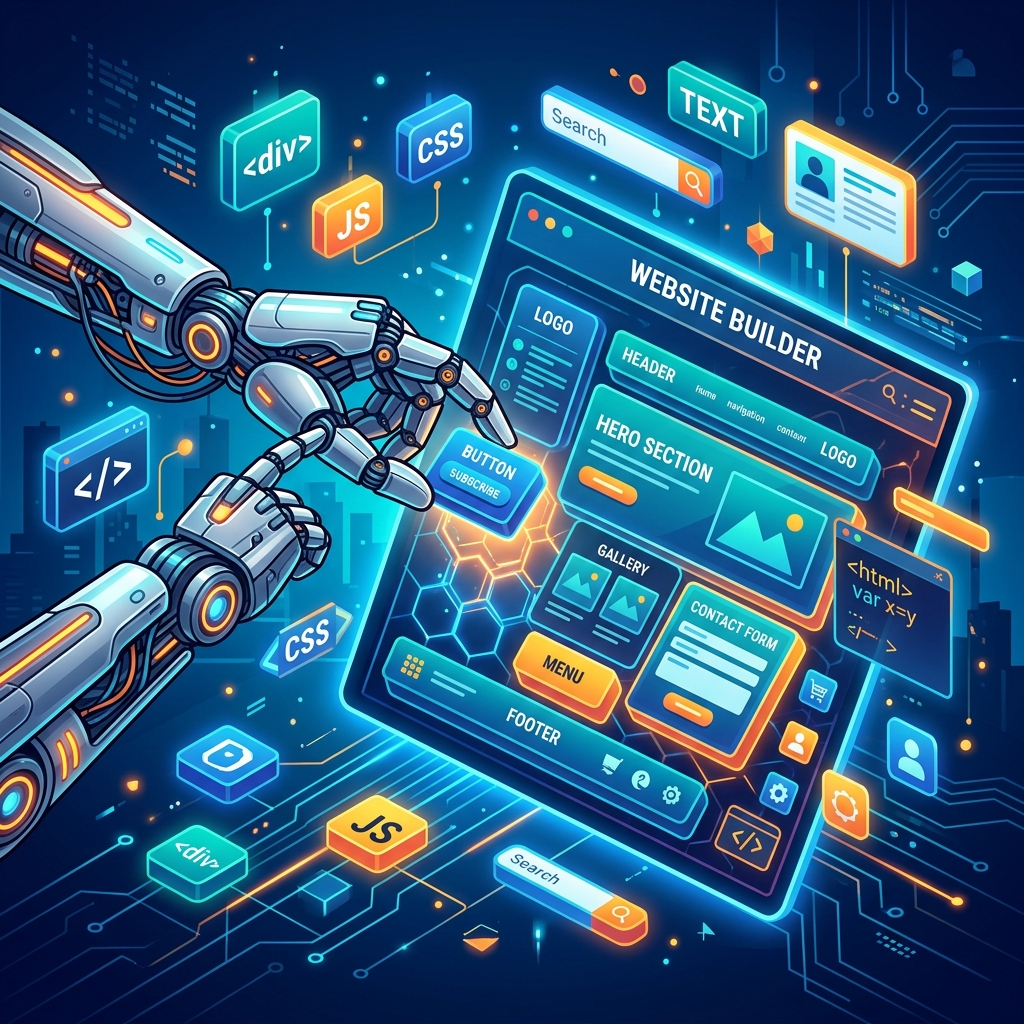
AI website builders and prompt-to-site tools can produce a complete marketing site in minutes. These outputs are often good enough for early validation or simple brochure sites. For brand-critical or complex experiences, professionals still refine structure, typography, motion, and component systems by hand.
The practical outcome is faster exploration of options and lower cost for early concepts. The risk is shipping unrefined AI defaults that feel generic or perform poorly.
Coding and Development
AI coding assistants and agentic tools have changed day-to-day development more than almost any other area.
Developers use tools that:
- Generate component skeletons and form logic
- Suggest tests and documentation
- Refactor and explain existing code
- Translate designs into working front-end code
- Help debug across files and frameworks
Surveys show a majority of developers now use AI tools regularly, and a substantial share of code in many projects is AI-assisted or AI-generated. The best results still come from teams that treat AI output as a starting point: they review, test, enforce design systems, and own the architecture.
For businesses, this means internal teams and agencies can deliver features faster. It also means the quality of review processes and technical leadership has become more important, not less.
Content and SEO
AI drafts page copy, meta descriptions, FAQs, and blog outlines at high speed. It can also suggest structure that aligns with search intent. However, search engines and AI answer systems increasingly reward original insight, clear structure, trust signals, and fast, accessible pages.
Key implications for website development:
- Thin or generic AI content performs poorly over time.
- Structured data, semantic HTML, and strong Core Web Vitals remain essential.
- Sites must be prepared for both traditional rankings and citation in AI-generated answers.
- Human editors still shape voice, accuracy, and differentiation.
AI accelerates content production; strategy and editorial standards determine whether that content earns attention.
Personalization and On-Site Experience
Modern sites increasingly adapt content, offers, and navigation based on visitor behavior, source, or known preferences. AI makes sophisticated personalization more accessible without large custom data-science teams.
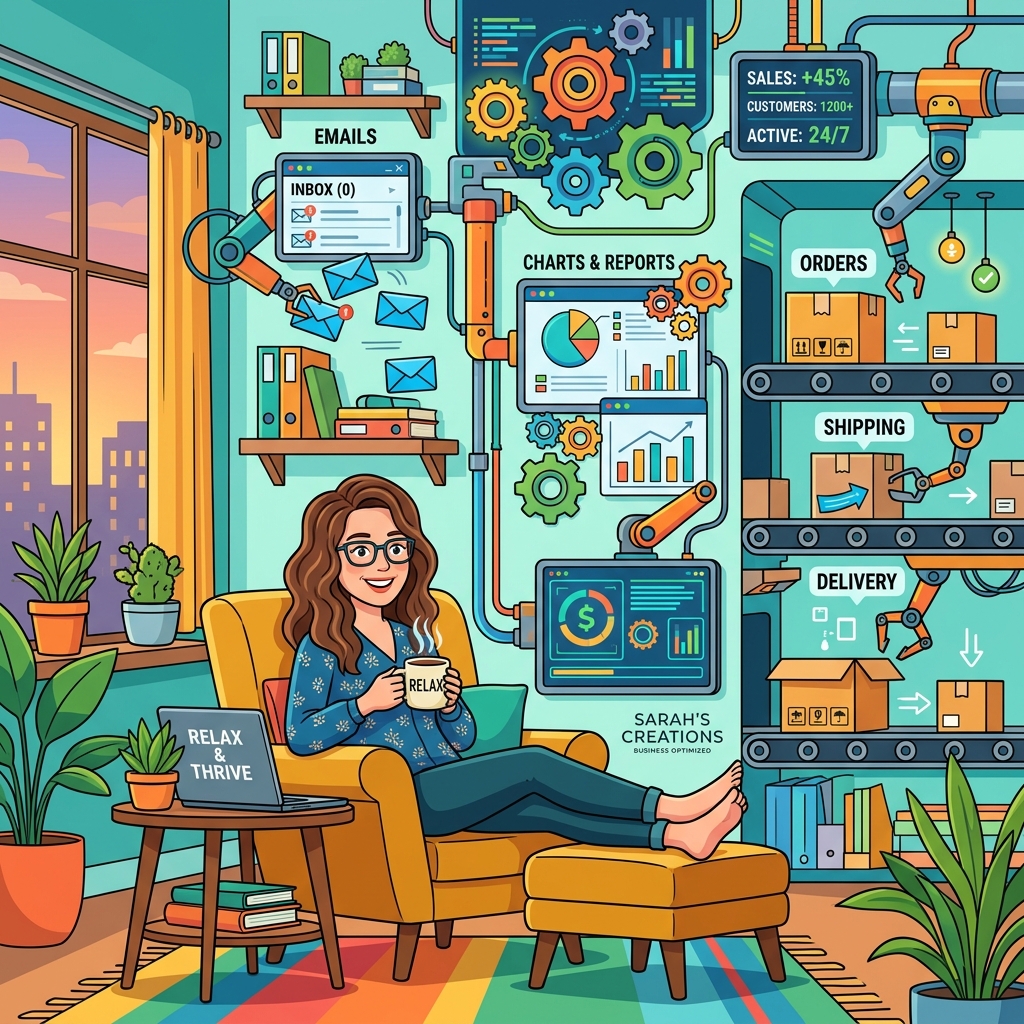
Chatbots and AI agents embedded on sites handle routine questions, qualify leads, and route complex issues. When implemented well, they improve response times and free human staff for higher-value conversations. When implemented poorly, they create frustration.
Website development now includes designing the rules, escalation paths, and measurement for these experiences rather than only static page layouts.
Testing, Maintenance, and Operations
AI assists with generating test cases, visual regression checks, and even suggesting fixes for common issues. Monitoring tools surface anomalies faster. Content refreshes and simple updates can be proposed by AI and approved by humans.
The net effect is that maintenance becomes more continuous and less purely reactive. Teams that invest in good observability and clear ownership still outperform those that treat AI as a complete replacement for process.
What This Means for Businesses
Faster time to useful first versions
Prototypes, landing pages, and internal tools can be explored and validated much more quickly.
Shift in required skills
The most valuable people combine domain knowledge, taste, and the ability to direct and critique AI tools effectively. Pure “button-pushing” production work is less scarce.
New quality risks
AI-generated code and design can introduce performance bloat, accessibility gaps, security issues, or brand inconsistency if not reviewed. Core Web Vitals and accessibility remain non-negotiable.
Different build-vs-buy decisions
Simple sites and marketing pages are more often candidates for AI-assisted builders or lighter custom work. Complex product experiences, integrations, and systems that must scale still benefit from experienced development teams.
Ongoing operating model
Websites are no longer “build once and leave.” AI makes continuous improvement cheaper, so the organizations that treat the site as a living product gain an advantage.
Common Mistakes to Avoid
- Shipping unedited AI output that feels generic or fails performance and accessibility checks.
- Using AI builders for complex, integration-heavy sites without a plan for maintainability.
- Neglecting Core Web Vitals because the generator “looked fine” in a demo.
- Assuming AI removes the need for clear strategy, information architecture, or brand guidelines.
- Ignoring the review and approval process for customer-facing content and code.
- Choosing tools only on speed of generation rather than quality of the shipped code and long-term ownership.
Frequently Asked Questions
Is AI replacing web developers?
No. AI is changing the mix of work. Boilerplate and first-draft production are faster; architecture, complex integrations, performance, accessibility, security, and product judgment remain human responsibilities. Demand has shifted toward people who can direct AI effectively.
Should every business use an AI website builder?
For simple brochure or early-stage sites, AI builders can be a fast, cost-effective starting point. For brand-critical sites, e-commerce with custom logic, or systems that integrate deeply with other tools, a hybrid or custom approach usually produces better long-term results.
Does AI-generated code hurt SEO?
Search engines evaluate the page that ships, not the tool that built it. Lean, semantic, fast, accessible pages perform well regardless of origin. Bloated or poorly structured AI output can hurt rankings and Core Web Vitals.
How much faster is AI-assisted development?
Teams commonly report substantial reductions in time for scaffolding, component creation, content drafts, and routine updates. Gains vary by project type and by how disciplined the review process is.
What skills should web teams prioritize now?
Strong fundamentals (HTML, CSS, performance, accessibility), system design, prompt and agent literacy, the ability to evaluate AI output critically, and clear product and brand judgment.
Can AI handle website maintenance?
AI can propose updates, generate content refreshes, and help diagnose issues. Ownership of prioritization, brand consistency, and final quality still sits with the team.
How should agencies adapt?
Agencies that use AI to deliver more iterations, faster prototypes, and higher-value strategy/consulting tend to thrive. Those that sell only slow, manual production face pressure on price and speed.
Conclusion
AI is changing website development by compressing the cost of drafts, variants, and routine code. The result is faster exploration and higher expectations for polish and personalization. The work that creates durable advantage—strategy, architecture, brand expression, accessibility, performance, and continuous improvement—remains firmly human.
Businesses that treat AI as a production accelerator inside a disciplined process will ship better sites faster. Those that treat it as a complete substitute for judgment will ship generic or fragile experiences. The practical path is clear: use AI to move faster on the intermediate steps, keep strong quality gates, and invest in the skills that machines still cannot replace.
Our Services
- Website Development services
- Mobile App Development
- AI Automation
- AI Agents
- n8n Automations (for site integrations and workflows)
- Lead Generation Automation
- Customer Support Automation (on-site agents and chat)
- OpenClaw or related agent pages